1. The Interconnected Pillars of Health
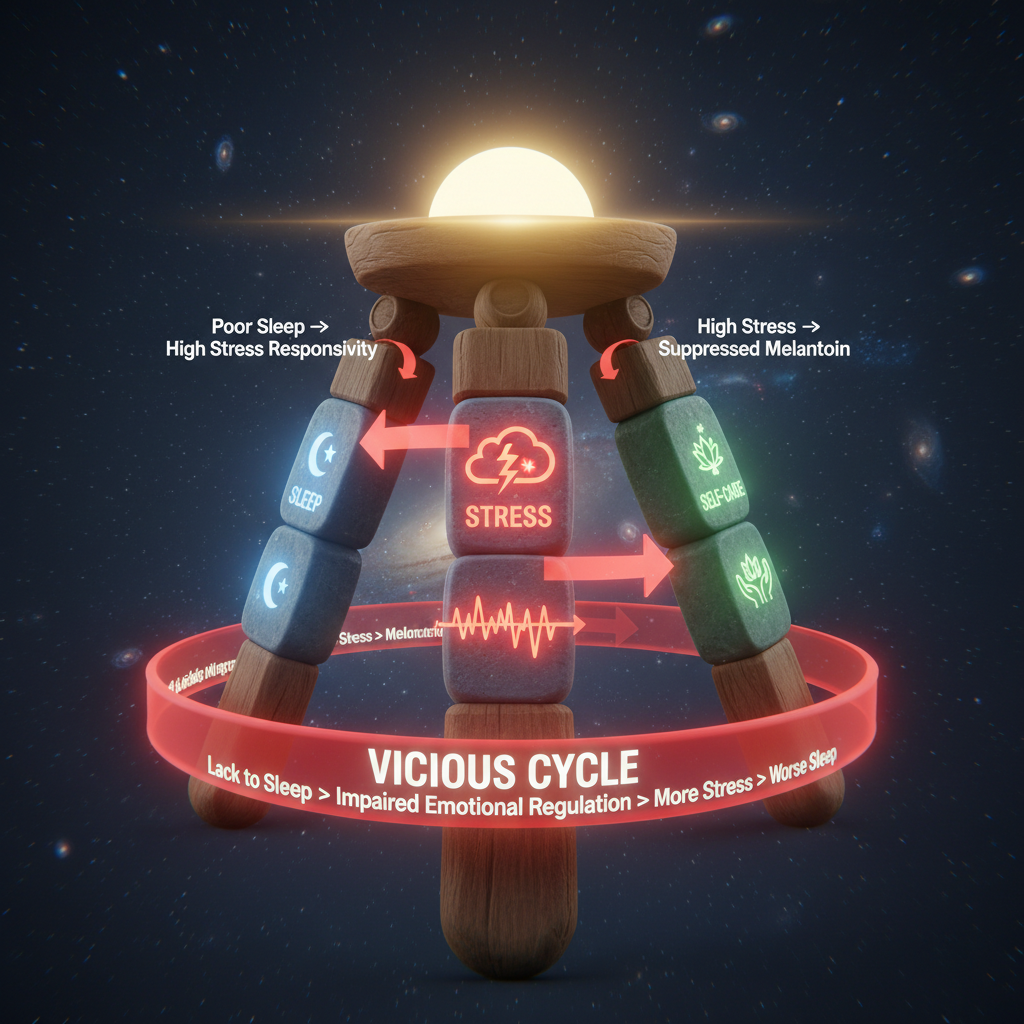
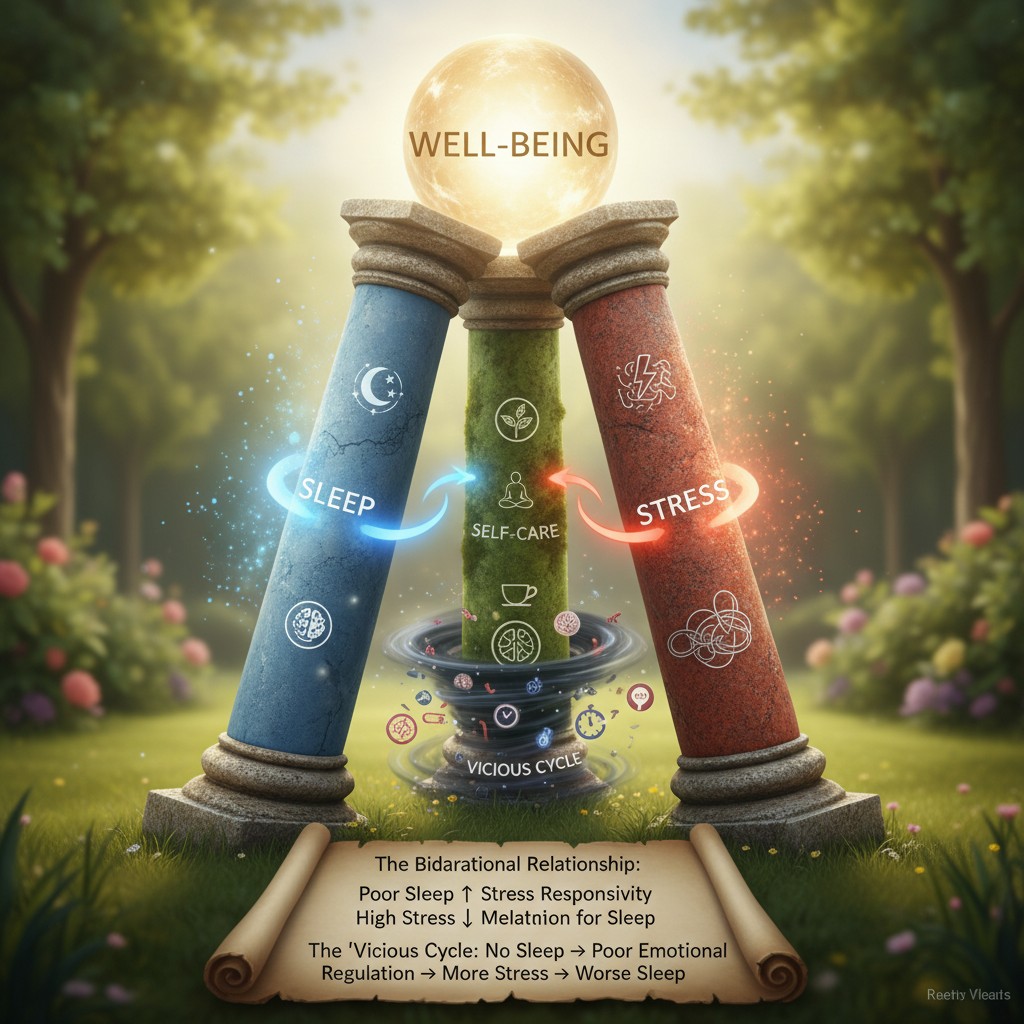
Start by establishing that sleep, stress, and self-care are not independent; they are the three legs of a tripod supporting your well-being.
- The Bidirectional Relationship: Poor sleep increases stress responsivity, making you react more strongly to minor annoyances. Conversely, high stress activates your sympathetic nervous system (“fight-or-flight”), which suppresses the melatonin needed for sleep.
- The “Vicious Cycle”: When you don’t sleep, your brain’s ability to regulate emotions declines, leading to more stress, which then makes it even harder to sleep the next night.
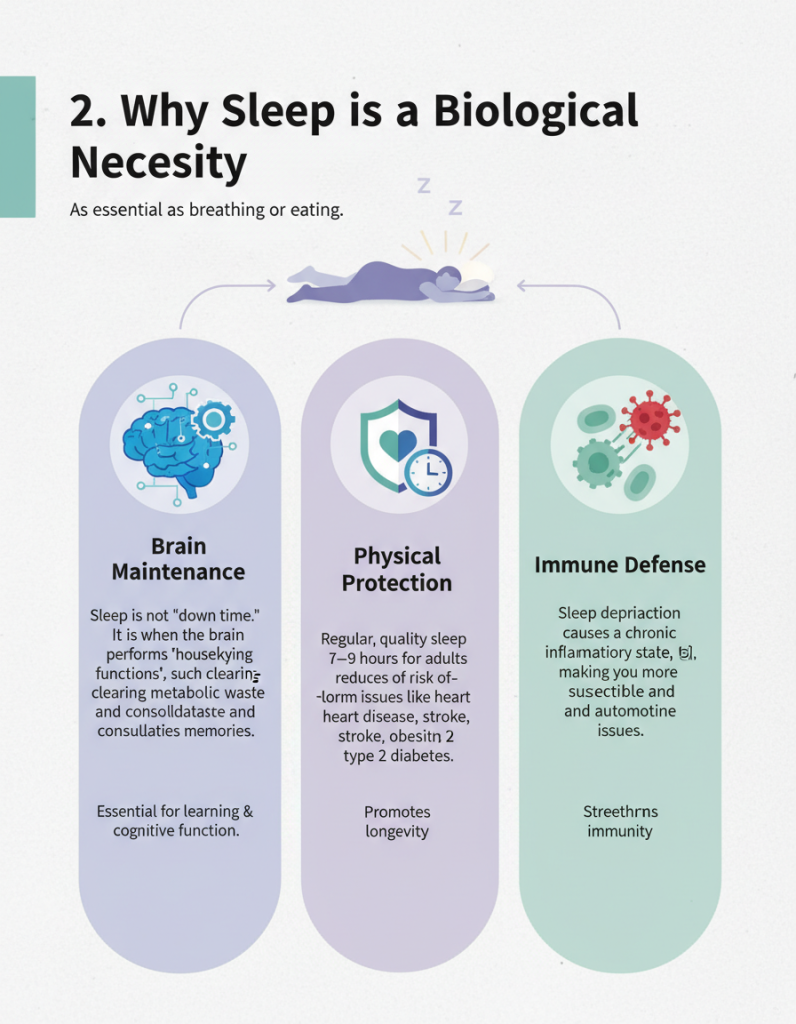
2. Why Sleep is a Biological Necessity
Explain that sleep is as essential to the body as breathing or eating.
- Brain Maintenance: Sleep is not “down time.” It is when the brain performs “housekeeping functions,” such as clearing metabolic waste and consolidating memories.
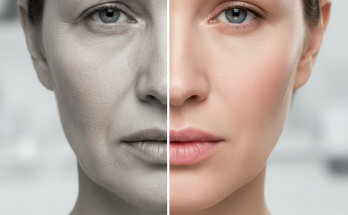
- Physical Protection: Regular, quality sleep of 7–9 hours for adults reduces the risk of long-term issues like heart disease, stroke, obesity, and type 2 diabetes.
- Immune Defense: Sleep deprivation causes a chronic inflammatory state, making you more susceptible to infections and autoimmune issues.
3. Understanding Stress and “Sleep Reactivity”
Not everyone responds to stress the same way. Introduce the concept of sleep reactivity.
- High vs. Low Reactivity: People with high sleep reactivity experience drastic sleep deterioration even from mild stressors (like an unfamiliar sleep environment), while low-reactive sleepers remain largely unperturbed.
- The Role of Rumination: Mental “looping” or worrying about daily stressors is a primary mediator that turns daily stress into a night of insomnia.
4. Self-Care: The Circuit Breaker
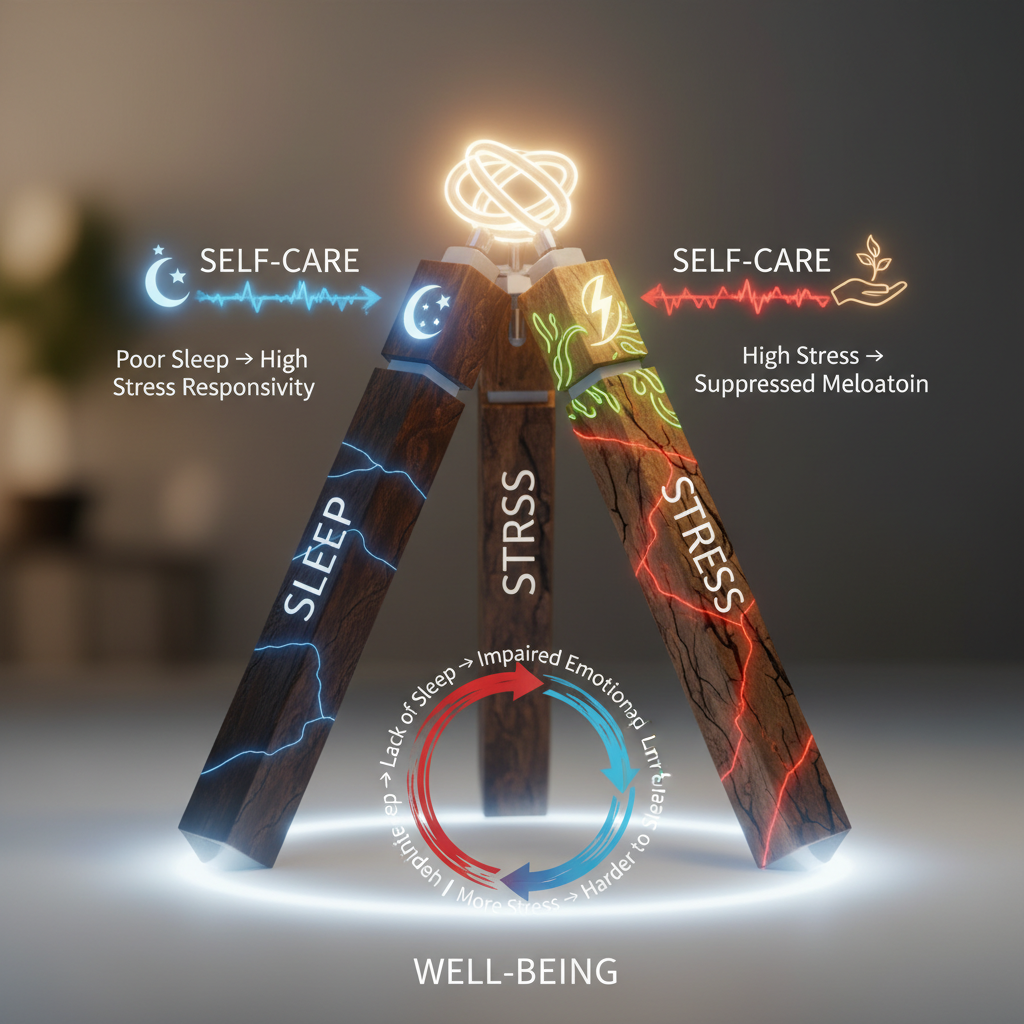
Self-care isn’t a luxury; it’s a set of skills to manage your biological response to the world.
- Mastering Sleep Hygiene:
- Consistency: Go to bed and wake up at the same time every day, even on weekends, to align with your circadian rhythm.
- The Environment: Your bedroom should be a “sanctuary”—cool, dark, and quiet.
- The “Wind-Down” Hour: Turn off electronic screens 30–60 minutes before bed. The blue light from phones inhibits melatonin production.
- Stress Management Techniques:
- The 4 As: Learn to Avoid unnecessary stress, Alter the situation, Adapt to the stressor, or Accept what you cannot change.
- Physical Activity: Regular exercise is a massive stress reliever, but avoid strenuous activity within 4 hours of bedtime so your body can cool down for sleep.
- Mindfulness and Breathing: Techniques like box breathing or progressive muscle relaxation activate the “relaxation response,” the physiological opposite of stress.
5. Practical Steps for Daily Life
Conclude with a call to action.
- Keep a Stress Journal: Note what causes your stress and how you reacted to find patterns you can change.
- Identify One Change: Don’t try to fix everything at once. Start by setting a consistent wake-up time or swapping the “bedtime scroll” for a physical book.
Conclusion
Foundational health is built in the quiet moments of the night and the intentional choices of the day. By prioritizing sleep and practicing proactive self-care, you don’t just “feel better”—you provide your body with the biological environment it needs to thrive.