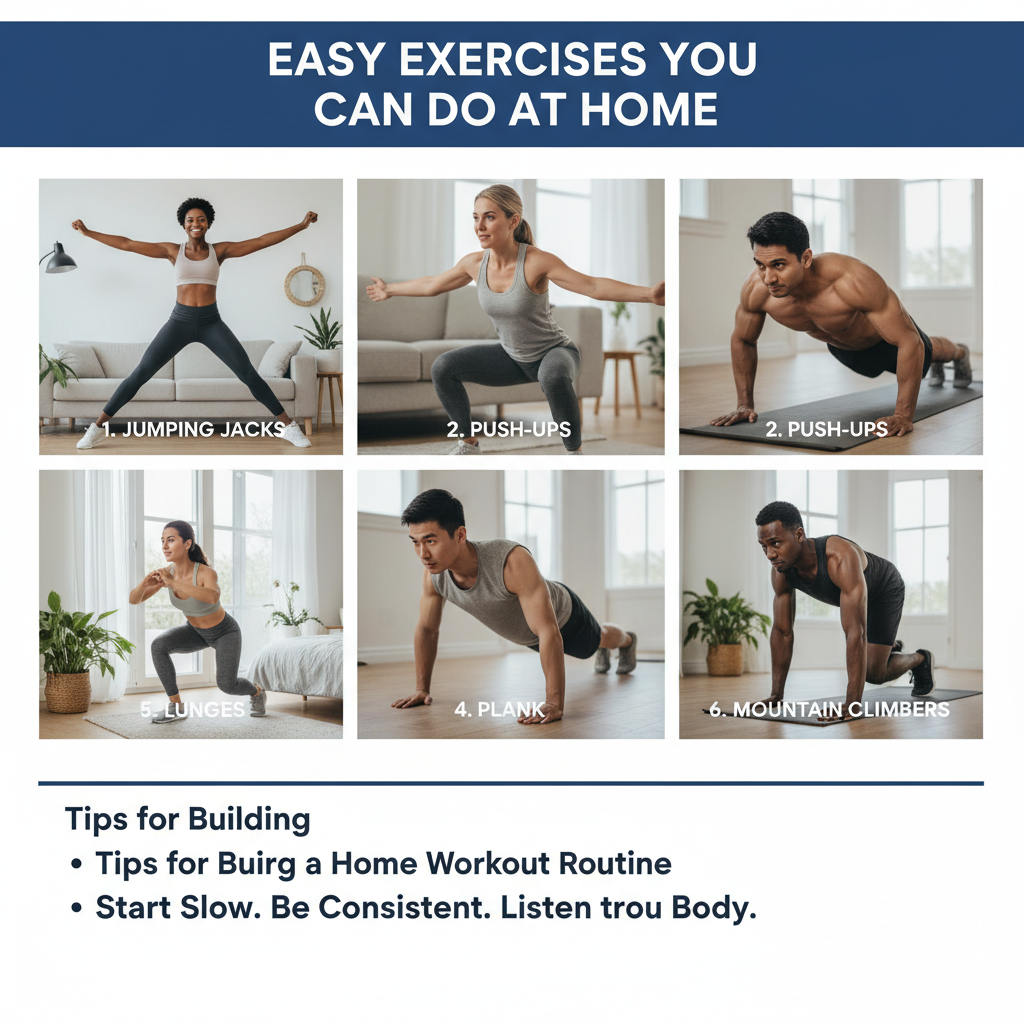
Maintaining a healthy and active lifestyle does not always require expensive gym memberships or complicated fitness equipment. Many effective exercises can be performed right at home using only your body weight. These exercises help improve strength, flexibility, balance, and overall health.
In today’s busy world, many people struggle to find time to visit a gym. Work schedules, family responsibilities, and other commitments often make it difficult to maintain a consistent fitness routine. Fortunately, home workouts provide a convenient solution.
Home exercises allow you to stay active without leaving your house. They are flexible, cost-effective, and suitable for people of all fitness levels. With just a small amount of space and a few minutes each day, you can build a workout routine that supports your health and well-being.
In this article, we will explore easy exercises you can do at home to improve your fitness and maintain a healthy lifestyle.
Benefits of Exercising at Home
Before discussing specific exercises, it is important to understand the advantages of working out at home.
First, home workouts save time. You do not need to travel to a gym or wait for equipment to become available. This convenience makes it easier to stay consistent with your exercise routine.
Second, exercising at home is cost-effective. Gym memberships and fitness classes can be expensive. Home workouts require little to no equipment, making them accessible to everyone.
Another benefit is flexibility. You can exercise whenever it fits your schedule, whether early in the morning, during lunch breaks, or in the evening.
Finally, home workouts allow you to progress at your own pace. Beginners can start with simple movements and gradually increase intensity as they gain strength and confidence.
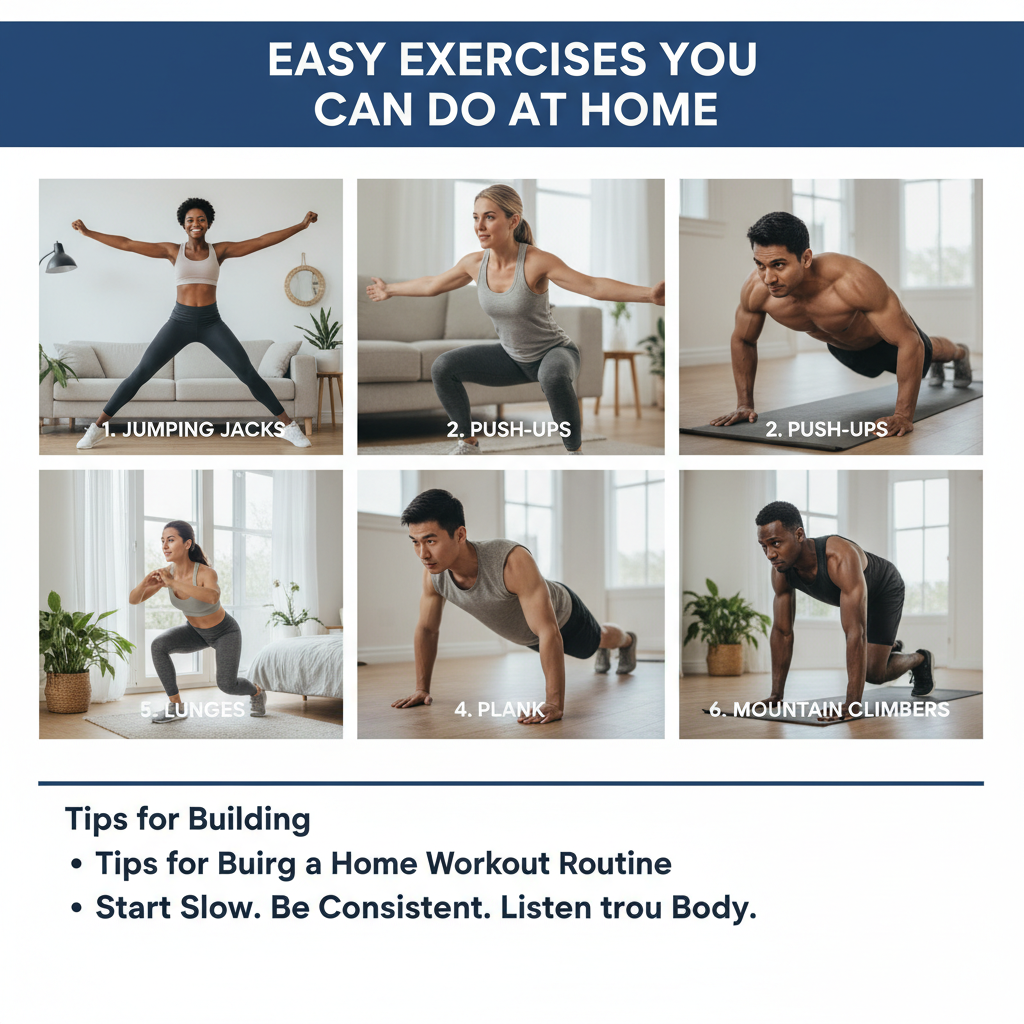
1. Jumping Jacks
Jumping jacks are one of the easiest and most effective exercises for warming up the body. This exercise increases heart rate, improves coordination, and prepares the muscles for more intense movements.
To perform jumping jacks, stand upright with your feet together and arms at your sides. Jump while spreading your legs apart and raising your arms above your head. Then jump again to return to the starting position.
Jumping jacks help improve cardiovascular endurance and burn calories. Performing them for one or two minutes can quickly increase your heart rate and activate multiple muscle groups.
This exercise is particularly useful at the beginning of a workout session because it prepares the body for physical activity.
2. Push-Ups
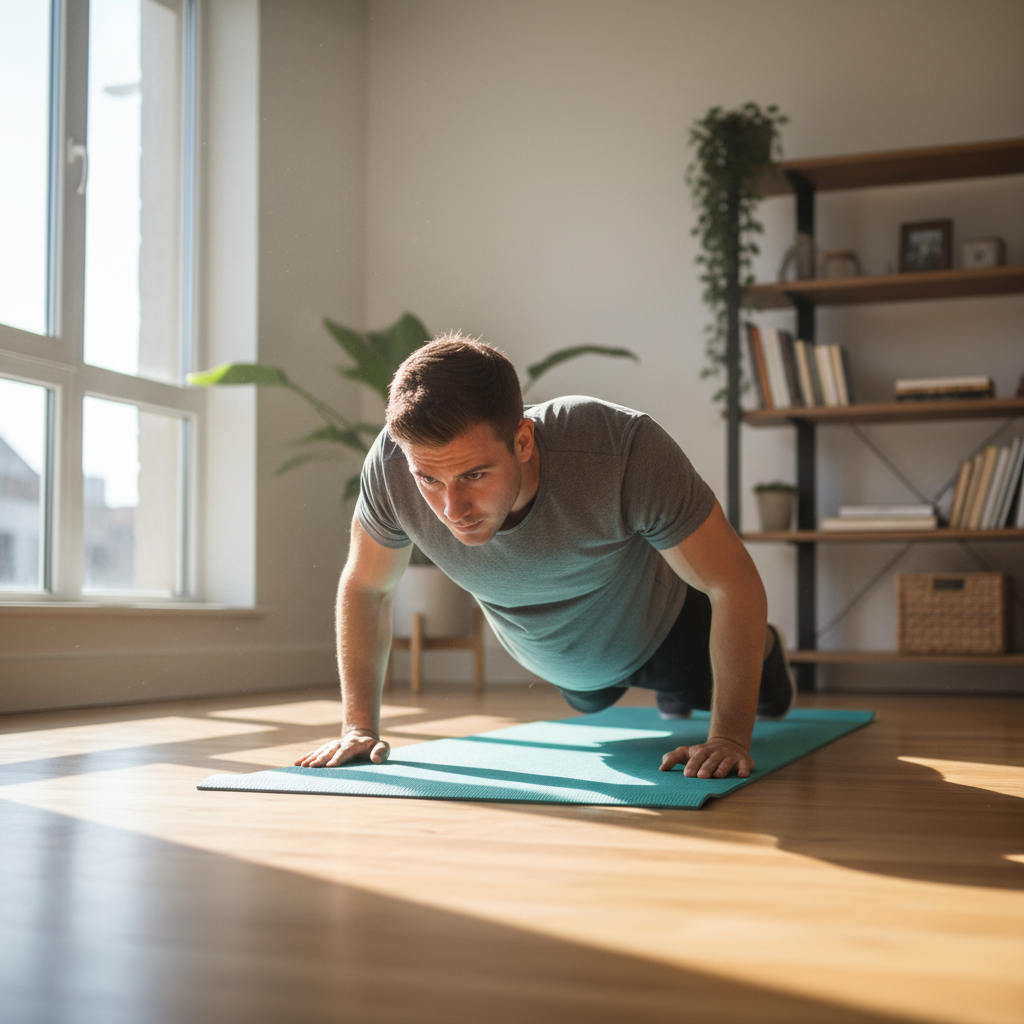
Push-ups are a classic bodyweight exercise that strengthens the upper body. They primarily target the chest, shoulders, and triceps, while also engaging the core muscles.
To perform a push-up, start in a plank position with your hands placed slightly wider than shoulder width. Keep your body straight from head to heels. Slowly lower your chest toward the floor by bending your elbows, then push back up to the starting position.
Beginners can modify this exercise by performing push-ups on their knees. This reduces the amount of body weight being lifted while still strengthening the muscles.
Regular push-ups help build upper body strength and improve overall fitness.
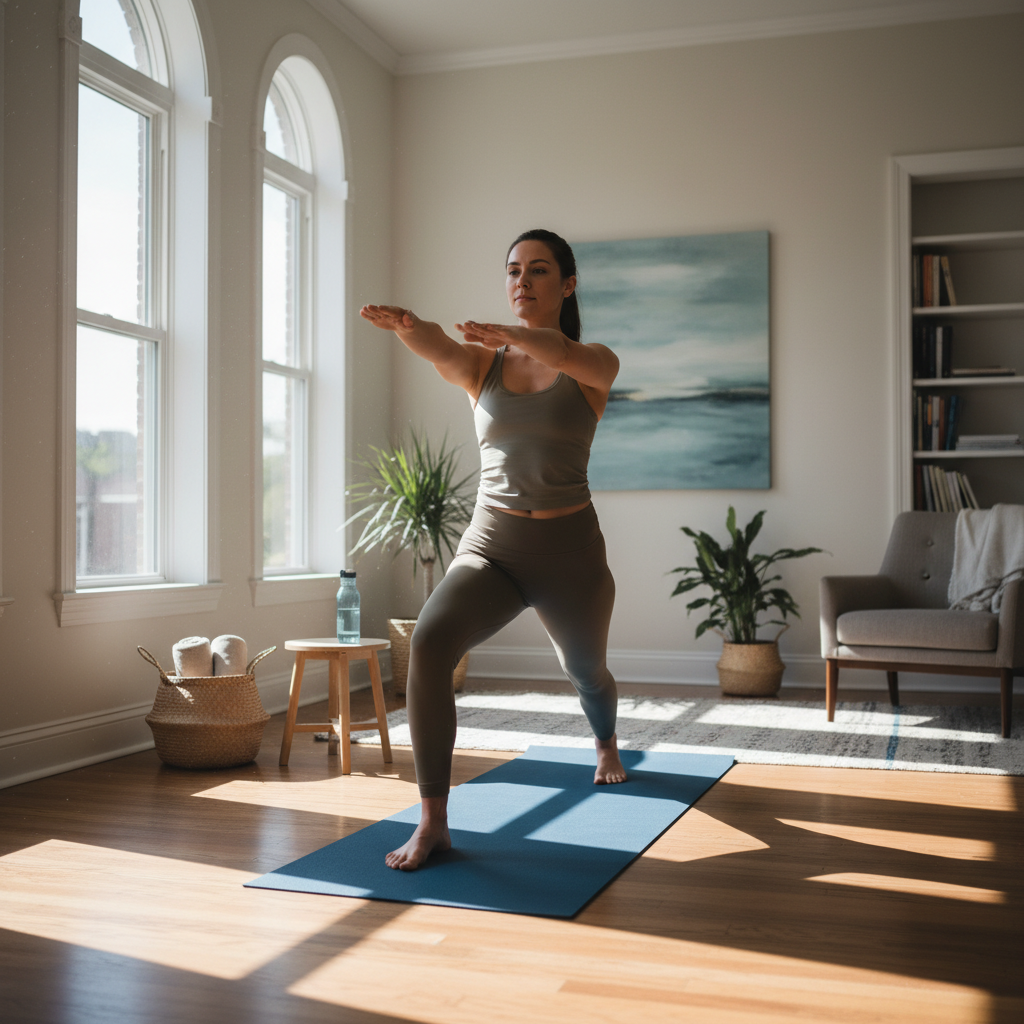
3. Squats
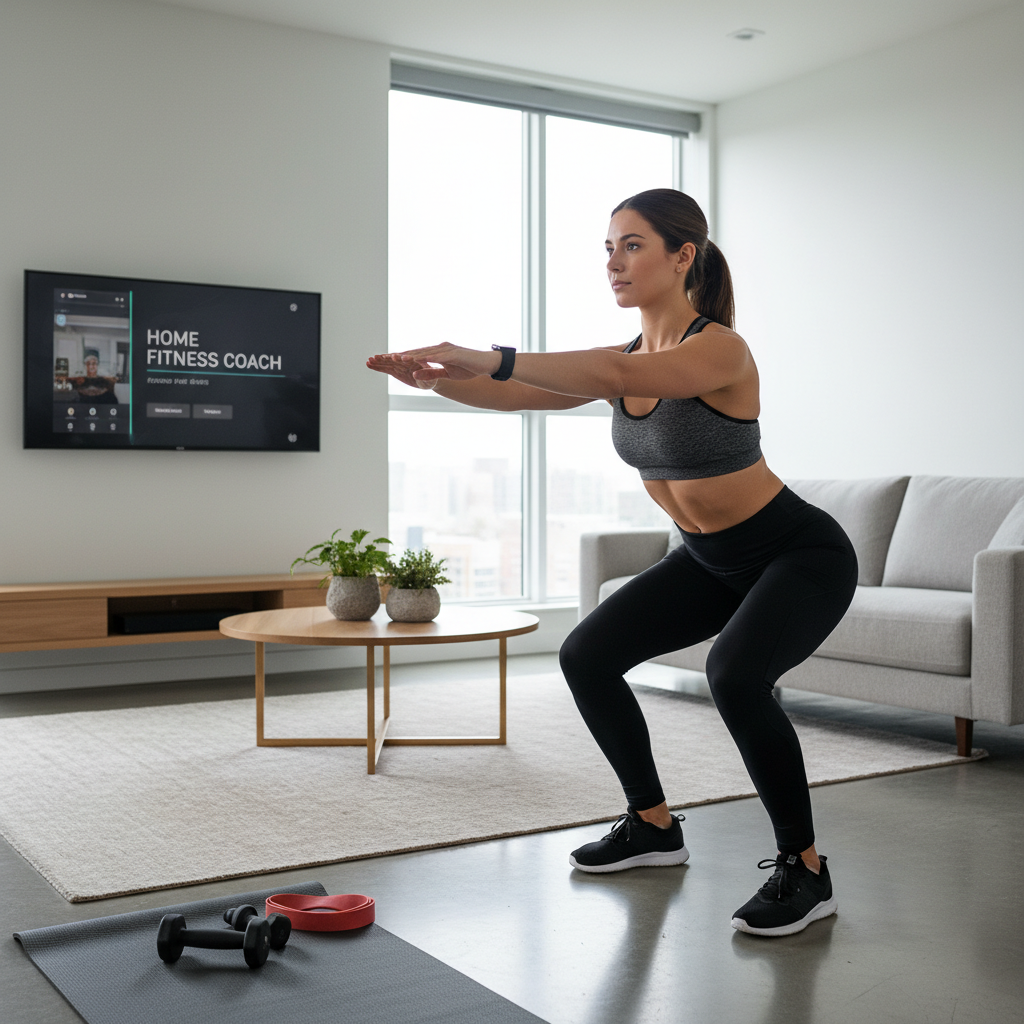
Squats are one of the most effective exercises for strengthening the lower body. They target the thighs, glutes, and core muscles.
To perform a squat, stand with your feet shoulder width apart. Slowly lower your body by bending your knees and pushing your hips backward, as if you are sitting in a chair. Keep your chest upright and your back straight. Then return to the standing position.
Squats help build leg strength, improve balance, and support joint health. They also enhance functional movements used in daily activities such as sitting, standing, and lifting objects.
Adding squats to your home workout routine can greatly improve lower body strength and endurance.
4. Plank
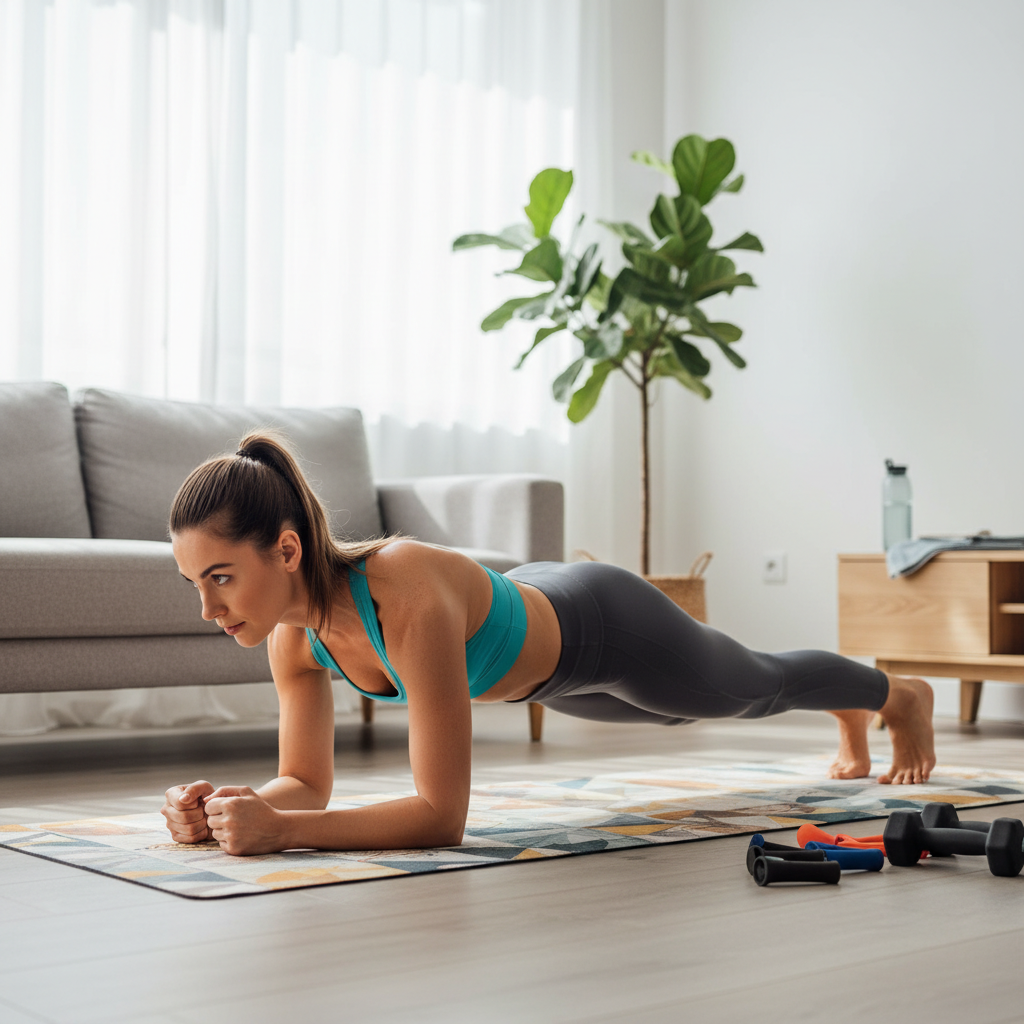
The plank is an excellent exercise for strengthening the core muscles. A strong core helps improve posture, balance, and stability.
To perform a plank, lie face down on the floor and lift your body onto your forearms and toes. Keep your body straight from head to heels and engage your abdominal muscles.
Hold this position for as long as possible while maintaining proper form. Beginners may start with 20 to 30 seconds and gradually increase the duration.
The plank targets the abdominal muscles, lower back, and shoulders. It is one of the most effective exercises for building core strength.
5. Lunges
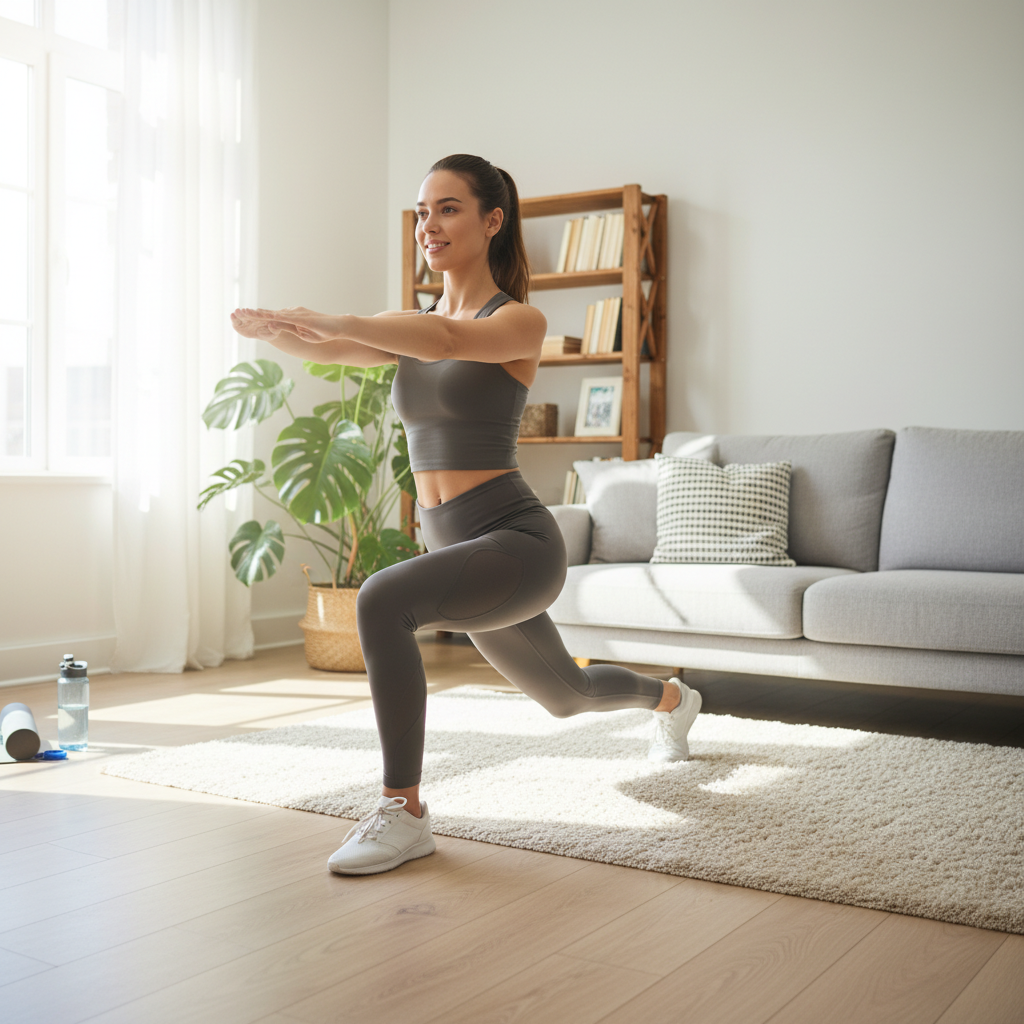
Lunges are another powerful lower body exercise. They strengthen the legs, glutes, and hips while also improving balance and coordination.
To perform a lunge, step forward with one leg and lower your body until both knees form approximately 90-degree angles. Then push back up to the starting position and switch legs.
Lunges help improve mobility and stability in the hips and knees. They also activate multiple muscle groups, making them a highly efficient exercise.
Performing lunges regularly can enhance lower body strength and reduce the risk of injury.
6. Mountain Climbers
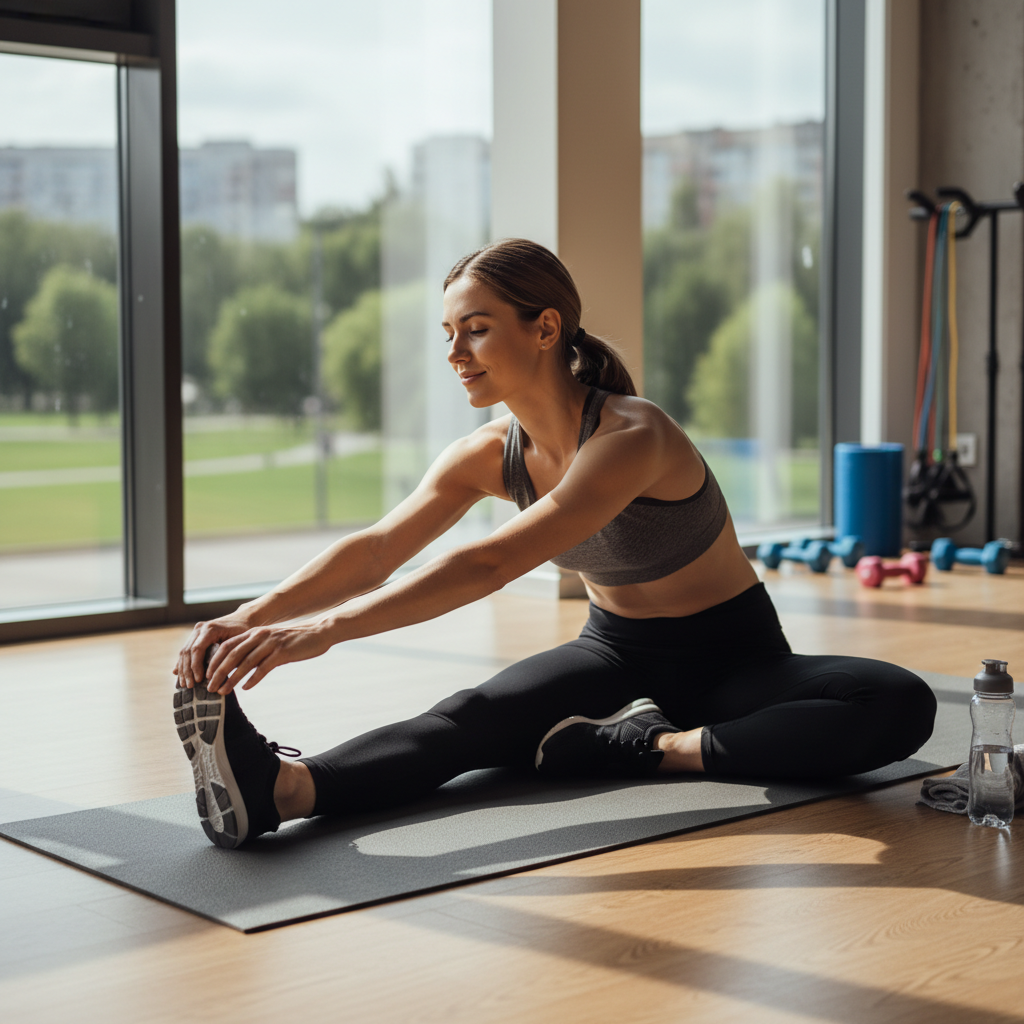
Mountain climbers are a dynamic exercise that combines cardio and strength training. They work the core, arms, and legs while also increasing heart rate.
To perform mountain climbers, start in a plank position. Bring one knee toward your chest, then quickly switch legs as if you are running in place.
This exercise improves endurance, coordination, and calorie burning. Mountain climbers are often included in high-intensity interval training (HIIT) workouts because they engage multiple muscle groups simultaneously.
7. Glute Bridges
Glute bridges are an excellent exercise for strengthening the glute muscles and lower back.
To perform a glute bridge, lie on your back with your knees bent and feet flat on the floor. Place your arms at your sides. Slowly lift your hips toward the ceiling while squeezing your glutes. Hold briefly at the top, then lower back down.
This exercise improves hip strength and helps reduce lower back pain caused by prolonged sitting.
Glute bridges are especially beneficial for people who spend long hours sitting at desks.
8. Stretching Exercises
Stretching is an important part of any fitness routine. It improves flexibility, reduces muscle tension, and helps prevent injuries.
Simple stretching exercises include touching your toes, stretching your arms overhead, and gently rotating your neck and shoulders.
Stretching after a workout helps the muscles relax and recover. It also improves range of motion and promotes better posture.
Taking a few minutes to stretch daily can make a significant difference in overall physical health.
Tips for Building a Home Workout Routine
If you are new to exercise, start slowly and gradually increase intensity. Consistency is more important than performing extremely difficult workouts.
A simple routine might include:
• 2 minutes jumping jacks
• 10 push-ups
• 15 squats
• 30 seconds plank
• 10 lunges per leg
Repeat the routine three times for a complete workout.
Always listen to your body and rest when necessary. Staying hydrated and maintaining proper nutrition will also support your fitness progress.
Conclusion
Staying active does not require complicated equipment or expensive gym memberships. Many effective exercises can be performed right at home using only your body weight.
Jumping jacks, push-ups, squats, lunges, planks, and stretching exercises are simple movements that provide significant health benefits. These exercises improve strength, endurance, flexibility, and overall physical fitness.
By incorporating these easy exercises into your daily routine, you can maintain a healthy lifestyle and improve your well-being without leaving your home.
Consistency and dedication are the keys to achieving long-term fitness results.